
MSE Investor Day Conference – Finance Minister’s address
Maximising people’s savings
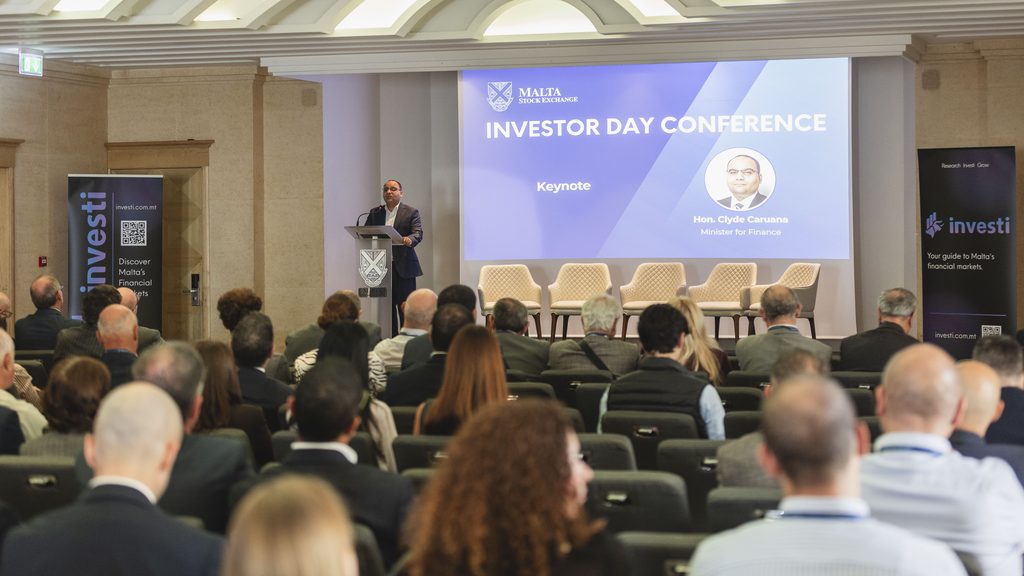
The Malta Stock Exchange hosted its first Investor Day Conference on 29 October 2026. As part of our ongoing coverage, we are delving deeply into each of the major speeches and presentations throughout the day.
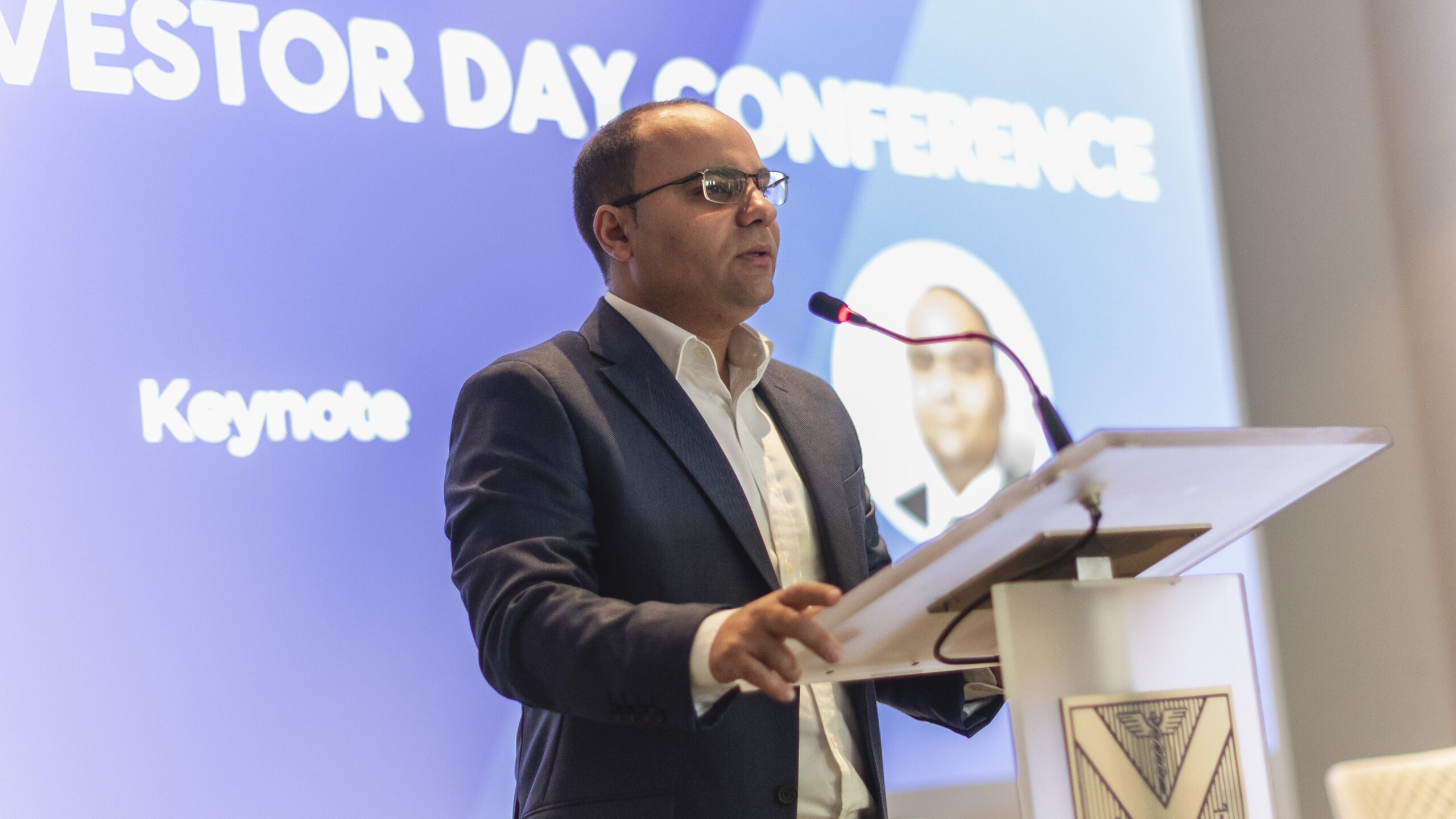
MSE Executive Chairman Joseph Portelli’s welcome address was followed by an address from Finance Minister Clyde Caruana, who praised the MSE on the Investi website, a “valuable tool because, needless to say, information is a key aspect in having fully efficient markets. And, therefore, I’d like to thank you for all the work that you’ve put into this initiative so that, of course, it can help our investors to navigate better through our markets.”
Mr Caruana shared some thoughts “about one of Malta’s greatest economic strengths, but also one of our most important, untapped opportunities, the savings of our people. The Maltese have long understood the importance of putting something aside. Families do save for emergencies, for their children, for a home and for retirement.
“This saving is quite a virtue. It has helped households withstand uncertainty and has provided a banking system with a stable source of funding. But we must now ask a further question: are we making the best possible use of the capital that our nation has accumulated throughout the years?”
(Photos: Jean Marc Zerafa)
Malta generated more savings than it has absorbed through domestic investment over many years, Mr Caruana observed. “This has not happened overnight. During the years of economic expansion, rising employment and incomes – all these have strengthened the capacity of households and businesses to save.”
Cautious approach to wealth management
“Our preference for bank deposits and property reinforced a cautious approach to wealth management,” he said. “Then came the pandemic, when restrictions on spending led to an exceptional accumulation of further savings. As the economy reopened, consumption recovered, but the tendency to maintain substantial financial buffers remained.
“The figures illustrate the scale of its development. According to the National Statistics Office, Maltese households saved approximately €2.54 billion in 2025, which is equivalent to 19.2% of their disposable income. Household investment measured as capital formation, on the other hand, amounted to €976 million, just shy of €1 billion. And, according to the Central Bank of Malta, by March 2026, household deposits in Maltese banks had exceeded €20 billion, with more than €17 billion held in overnight deposits.”
Mr Caruana clarified that these deposits are not literally doing nothing. “Banks use them to finance loans and other assets, and liquidity is essential for financial stability. However, when so much wealth is held in instruments offering limited monetary returns, we have to question whether households are receiving the full benefit of their financial discipline.”
He went on to point out that across Europe policymakers are examining how savings can better finance enterprise and innovation. “Malta has a particularly strong starting position in all this. The European Commission has noted that Maltese firms remain heavily dependent on internally generated funds and bank financing, with far less use of listed equity than the European average.”
Addressing the gap
“This suggests not a shortage of capital but a gap between the capital available and the channels through which it can support productive capacity. We must address this gap. We should not just look to save more, but make the savings we already have work harder. To seek better long-term returns, risk-adjusted returns, to protect purchasing power against inflation, and to support investment that creates higher value-added jobs and a more competitive, productive economy.
“As you well know, there can be no guarantee of higher returns and every investment involves an element of risk. That is precisely why transparent products, more information, professional advice and effective investment protection are a must. We must also broaden our understanding of investment.”
Mr Caruana said that, for generations, property and real estate have occupied a privileged place in Maltese household portfolios. “They have served many families well and, of course, will remain important. But concentrating too much wealth in one asset class within one small market carries its own risks. Property is relatively illiquid, it requires maintenance and exposes investors to local market conditions.
“A diversified portfolio can also include bonds, shares, regulated funds, pension products and investments in businesses. Here, our membership of the European Union offers an extraordinary advantage: a modest part of a single market of hundreds of millions of consumers, businesses and investors.
“Our opportunities do not end at our shoreline. Maltese savers can access a much wider range of regulated investment opportunities, and Maltese businesses can aspire to attract capital from across Europe. The single market allows us to combine our local strengths with the depth, expertise and scale of European finance.”
Savings and Investment Union
For this reason, Mr Caruana encourage local banks, insurers, fund managers, investment firms and pension providers, and possibly the Malta Stock Exchange itself, to familiarise themselves closely with the European Commission Savings and Investment Union. “Launched this year, this initiative seeks to remove barriers that threaten European capital markets and to connect savers more effectively with productive investment.
“Work is underway on savings and investment accounts, supplementary pensions, financial literacy, market integration and nexus to finance. These reforms can create opportunities for us, the Maltese institutions, that prepare early, innovate responsibly and offer products at competitive costs.
“Occupational pensions are especially important in all this. Government has devoted considerable work to developing an auto-enrolment framework that can make supplementary retirement saving more accessible while preserving for them the availability to opt out. The legislative and policy architecture have been substantially prepared and I do expect that next year we will have all these arrangements in place as we do the necessary legislative work through Parliament.
“Progress, I have to admit, has taken longer than we initially hoped – for a very specific reason. We will not introduce a system in which excessive charges consume an unreasonable share of workers’ future returns. Costs must be fair, transparent and proportionate. The purpose of a pension scheme is to build retirement for the saver, not simply fee income for the provider.”
International environment
The wider international environment makes this task more urgent, he added. “Across Europe, governments face difficult choices arising from geopolitical uncertainty, aging populations, energy pressures and competing demands on public finances. I only expect that these challenges will continue to intensify, and perhaps more than that, in the coming weeks and months.
“Malta, of course, is not immune to these challenges. Yet the strength of our household savings, the liquidity of our banks and the resilience built through the past economic decisions give us the opportunity to approach the future from a position of strength. Our question is not only how to respond to immediate pressures, but how to invest wisely for the next generation.
“This is where I want to address the private sector directly. Do not wait for government to design every product, identify every investment or create every opportunity. Financial institutions should compete to offer accessible, good value and well diversified solutions. Businesses should strengthen their governance and transparency so that investors have confidence to provide capital. Employers should engage seriously with occupational pension providers. Professional bodies and educators should help to improve financial literacy.
“Government has its own responsibilities and we will do our best to do more. But an investment culture cannot be created by the first enacted legislation. We have spent decades learning how to build prosperity and accumulate savings. The next chapter must be about deploying that prosperity in a very intelligent manner.”
Savings as the beginning of investment
Mr Caruana urged: “Therefore, let us move forward from a culture that sees saving as its destination to one that understands that savings is the beginning of investment and further future return. Investment is the opportunity that gives us the necessary future financial security.
“If we succeed, the benefits will translate into stronger retirement incomes, more resilient households, better funded businesses and an economy capable of creating more value with the resources that we already possess. That is the challenge before us. Let’s make out of the resources that we have the best use possible.”
Follow investi.com.mt for further detailed coverage of the first Malta Stock Exchange Investor Day Conference.