Malta Stock Exchange Institute successfully concludes Erasmus+ project on education in SME succession planning
Earlier this month, the Malta Stock Exchange Institute organised a conference to bring the Erasmus+ project, NextSMEs, to a successful conclusion. The MSEI led this two-year project, run with Erasmus+ and co-funded by the EU, with five other project partners from Belgium, Cyprus, Germany, Italy and Spain.
The core mission of NextSMEs is generational sustainability and bolstering family-led small and medium-sized enterprises (SMEs) across Europe. These businesses are vital to the European economy, constituting around 60% of all companies in the EU and serving as major contributors to employment and economic growth.
The project website, https://nextgensmes.eu, is fully operational, giving all the information on the project, including consortium members, the research carried out on succession planning, with the six modules that have been created, and a link to an e-learning platform. Both the website and the learning platform can be accessed free of charge until 2031.
Generational sustainability
Addressing the conference, Cliff Pace of the MSei said “sustainability” was chosen instead of succession planning “because succession planning is focused on succession. However, SMEs need to be sustainable and there is more to it than just succession planning.”
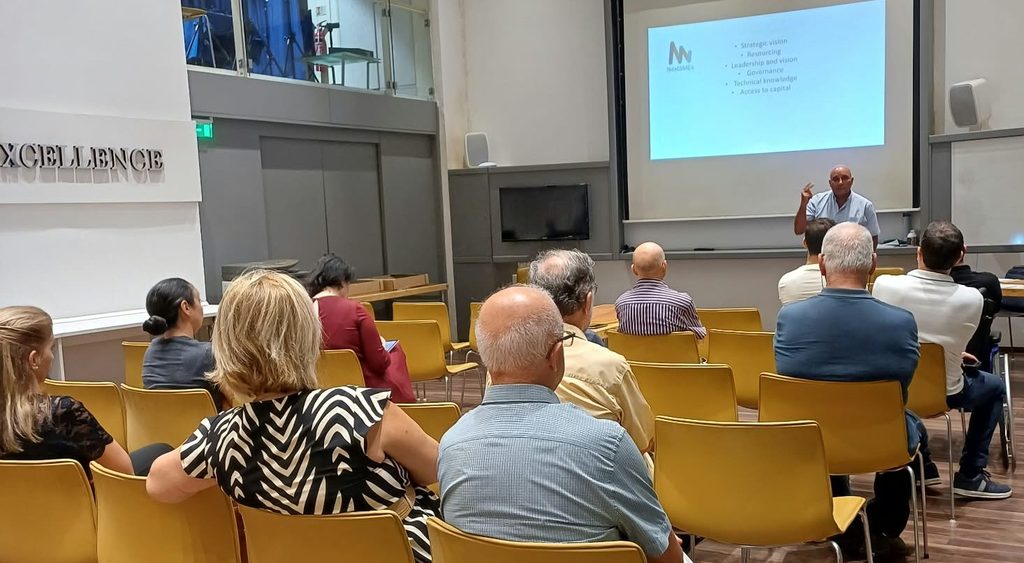
Among the issues Mr Pace went on to list are:
- a lack of strategic vision, especially as second- and third-generation family members get involved in the business;
- adequate resources to enable the SME to grow;
- the leadership and vision of the SME ownership, cascading down the generations;
- governance – keeping your house in order, obeying the rules, being compliant;
- technical knowledge around IT, marketing and financial planning;
- picking the right leader in a succession and, if you have three children and all three who want to take over, who is the one in an unbiased, unemotional way best equipped to take over?
- the dilution of business assets, especially when, three generations down the line, the business is supporting multiple families;
- change and conflict management;
- urgency and planning for the long term in businesses that are operations-focused; and
- retirement – enabling SME owners to exit the business, which also requires long-term planning.
NextSMEs website
Mr Pace then took the participants at the conference on a virtual tour of the NextSMEs website and e-learning platform. These are available in the five languages of the project partners, apart from English, and are freely accessible.
He then went on to list the other project partners:
- Coopération Bancaire pour l’Europe of Belgium, an organisation based in Brussels, founded in 1992 by several international banks to provide information and consulting services on European funding themes and programmes;
- The European Center for Social Finance of Germany, an expert in the field of social finance;
- ServIn of Italy, a guiding force of innovation in the field of business consulting, specialising in crucial areas for modern business: business management, energy management, circular economy and social innovation and social economy development;
- LT Synergy of Cyprus, which focuses on corporate governance, risk and compliance (GRC) practices and principles for organisations of all sizes; and
- Gestión Estratégica e Innovación (GEINNOVA) of Spain, a beacon of excellence in vocational education and training (VET), entrepreneurship and consultancy in the Aragon region.
Mr Pace pointed out that research conducted by the project partners in the course of the project revealed that there are a lot of similarities in the problems faced by SMEs in all six countries because there are natural obstacles to SME sustainability which transcend national borders.
“One of the key takeaways of the research is that succession is one of the biggest concerns of SMEs and is a concern which is often left unaddressed,” he said.
Another output of the project is a guide for Vet (vocational educational training) providers, with the MSEI signing a Memorandum of Understanding with the Malta Business School.
Thirdly, a strategic plan for family SMEs has been drawn up providing a guide to address succession planning, sustainability and related matters.
Fourthly are no fewer than six newsletters documenting the progress made by the partners during the course of the project.
Case study – AX Group
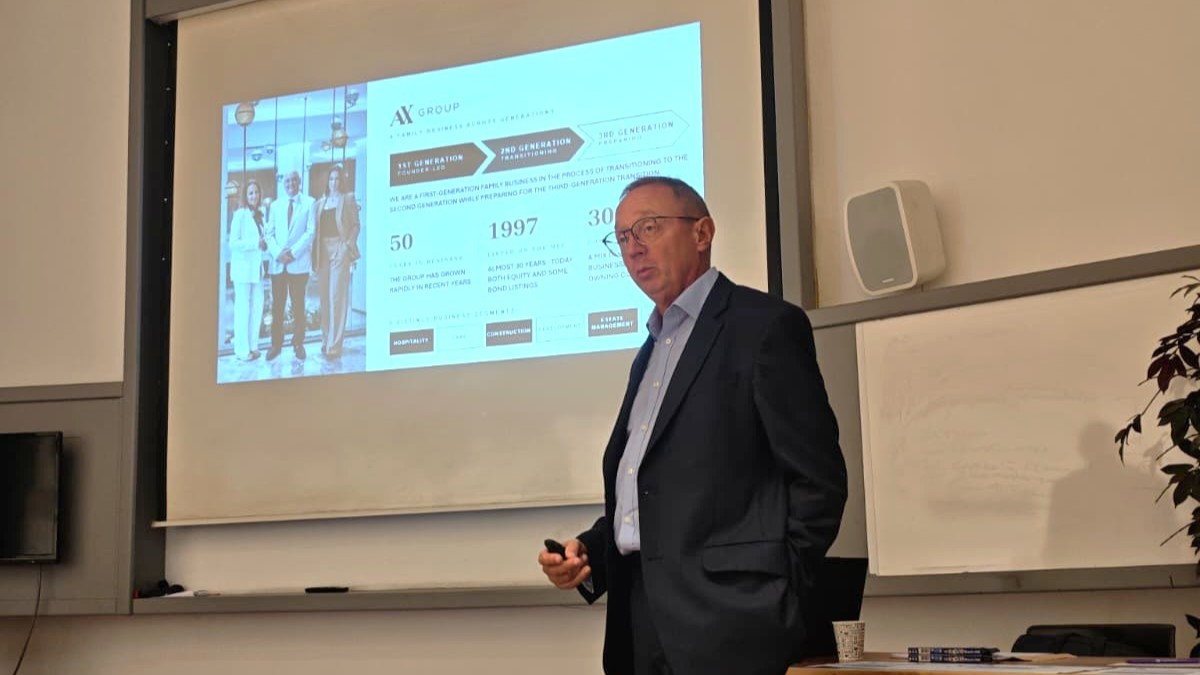
The keynote speaker at the conference was AX Group Chief Executive Officer Michael Warrington. A banker and qualified accountant by profession, Mr Warrington has been involved with the AX Group for almost 27 years. He also sits on the board of a number of family companies, and listed and regulated entities.
“Today, I am very much on my way out; in the sense simply that, although I’m still there as Chief Executive and the Deputy Chairman on the board, a lot of work has gone on in the last years to prepare for the second-generation transition,” he said. “We are now trying to set the tone, the parameters, because within a few years the third generation will be exploring the possibility of either joining the business or doing something else.”
The AX Group celebrated its 50th anniversary in 2025. It was listed on the Malta Stock Exchange in 1997 – which Mr Warrington referred to as “one of the wisest things” the founder Angelo Xuereb’s did since this brought the need for corporate governance. “This created a culture that his children grow up in,” he added.
Today the AX Group is composed of 30 companies with 1,400 employees spread over six divisions: hospitality, care, construction, development, property management and renewable energy. Turnover in 2025 was €138 million. The equity has grown to €300 million. Two companies are listed on the Malta Stock Exchange. The AX Group has a number of bond issues. Its subsidiary, AX Real Estate, has 25% of its equity listed and holds the bulk of the Group’s real estate portfolio worth over €0.5 billion.
The business is run by an Executive Management Team composed of 11 people, the majority being women. Mr Xuereb, 74, is still very involved in the business – the projects, designing, creating, being on site and being with the staff. His two daughters are very much involved in the business, with his elder daughter, Claire, running the care and hospitality side, which from a turnover perspective is by far the largest segment of the Group, and Denise very much involved in the development and construction side.
Transition to second generation
Mr Warrington outlined the process that will lead to the transition from the first generation to the second, the risks involved and how the wealth that has been created is professionally managed. “Within the first generation, and I would say up to the second generation, very often the family exists for the business,” he observed. “Starting with the second generation and by the third generation, the business exists for the family.”
The Executive Management Team, made up of professionals, all experts in their field, run the business day to day. They take operational decisions within well-defined structures, setting the ethical tone in the business. This, Mr Warrington stressed, is fundamental to any succession journey, especially more so today when 80% of the workforce are third-country nationals from 60 nationalities – excluding European nationals.
“I ensured that we build the wealth inside the family. Not the family’s wealth is all built inside the Group,” he said. “We worked to find that right formula to develop a culture of how family members are compensated, setting rules around how people earn money from the business, whether that is by way of salary, by way of bonus, by way of dividend.”
The AX Group’s core values are integrity, creativity and determination. “Those core values should be family values built around humility, trust and respect,” Mr Warrington added. The AX Group’s legacy is recorded at head office with an exhibition area with memorabilia to enable future generations to appreciate the journey of the Group.
“This builds a family identity that is relevant to its time, but adaptable over time,” he said.
Another document that has been built up, worked on, and will continue to work on – a live document that is written periodically – is a family charter. This determines the behaviour within the family.
“We have established that there is no automatic right to work in the business,” Mr Warrington said. “You have to earn that right and one of the things I very much admire in the Xuereb family is: when their children came to join the business, they didn’t become general managers on day 2. They started working in housekeeping in hotels. They needed to know what is involved.”
Mr Warrington recommended that structures in family businesses should be documented. Management should be empowered to take decisions and checks and balances put in place. “You need to have the right mechanisms and controls in place to make sure that the business runs the way that it should, that there is the honesty, transparency and the trust that goes into running a business, and all this is built on values, sustained by good governance and hopefully that will be the strength to take us across these generations,” he said.