GO plc’s two-engine growth strategy: investing in the core while expanding beyond telecoms
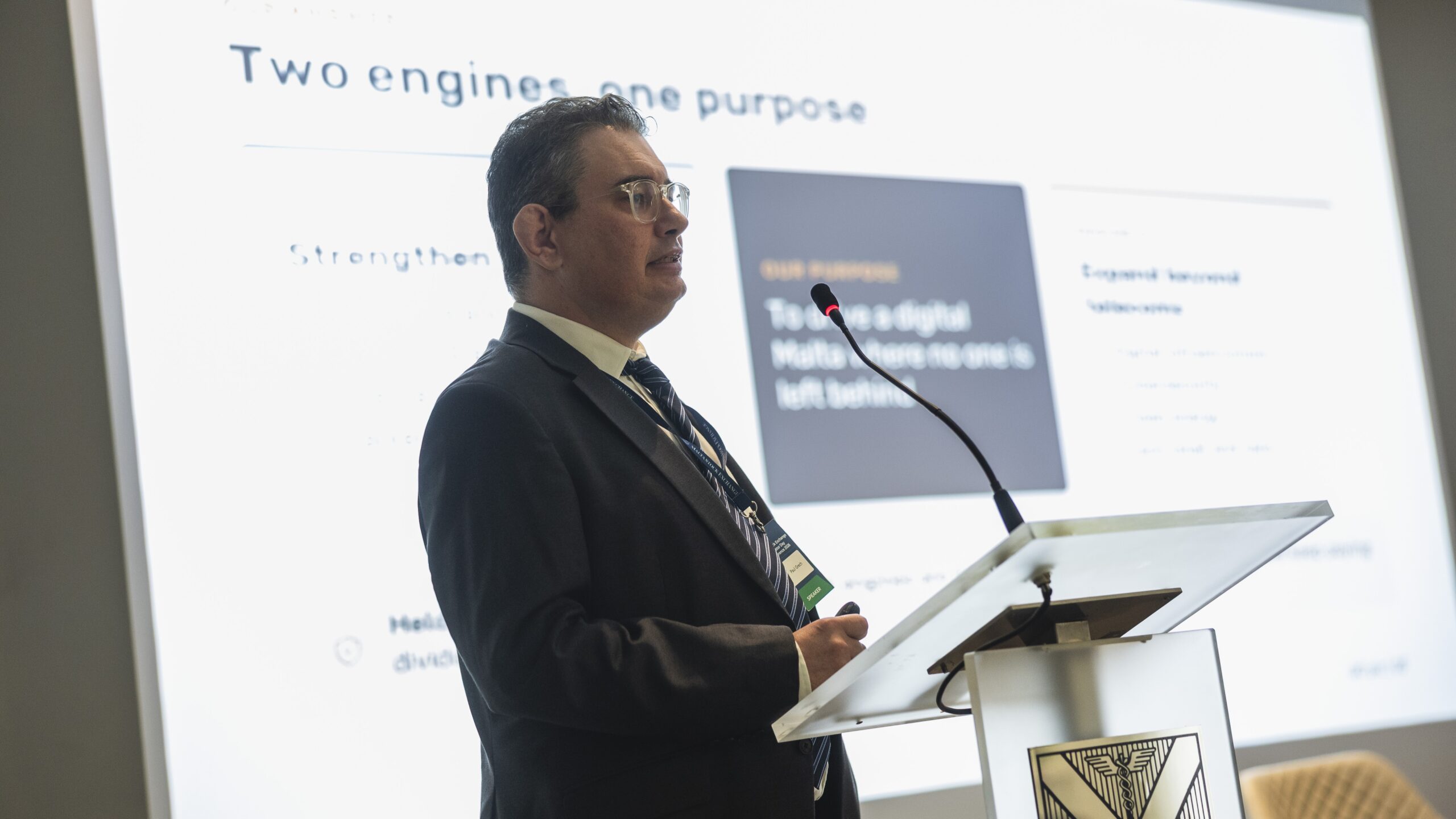
The Malta Stock Exchange hosted its first Investor Day Conference on 29 October 2026. As part of our ongoing coverage, we are delving deeply into each of the major speeches and presentations throughout the day.
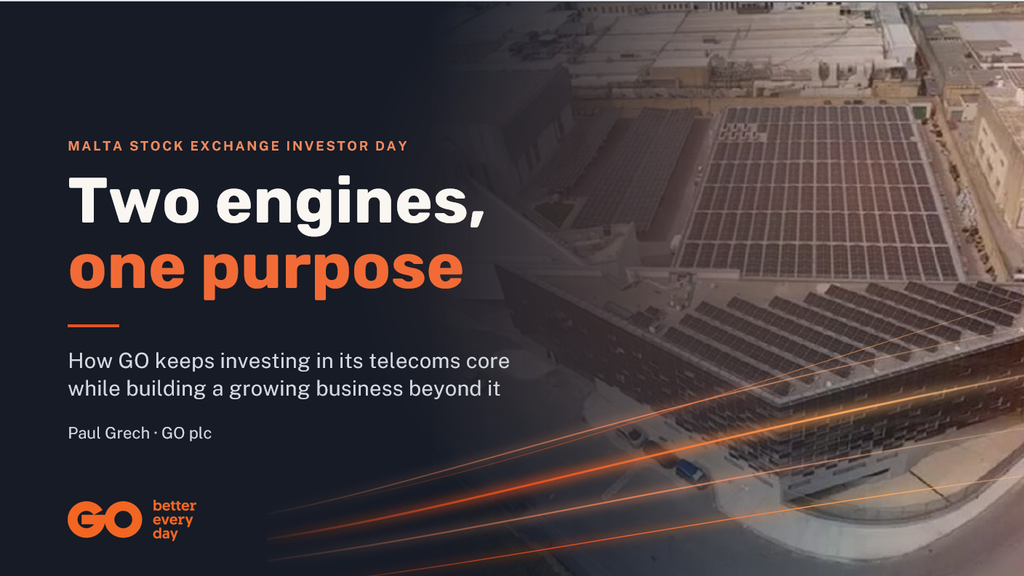
Paul Grech, Head of Investments at GO plc, outlined how the company is pursuing a dual growth strategy: continuing to invest heavily in its telecommunications business while building a portfolio of complementary businesses beyond traditional telecoms. The central theme of the presentation was encapsulated in the phrase “two engines, one purpose” – supporting a digital Malta while generating sustainable shareholder returns.
Mr Grech argued that telecommunications operators face structural challenges, including mature markets, high capital expenditure requirements and intense competition. In Malta, growth opportunities within core telecoms services are limited because most households and businesses are already connected, meaning operators largely compete for market share rather than entirely new customers.
Against this backdrop, Mr Grech said GO plc developed a strategy built around two connected growth engines. The first is the company’s traditional telecommunications business and the second consists of investments in adjacent sectors where the company believes it can leverage its customer relationships, brand, infrastructure and expertise.
Strengthening the telecommunications core
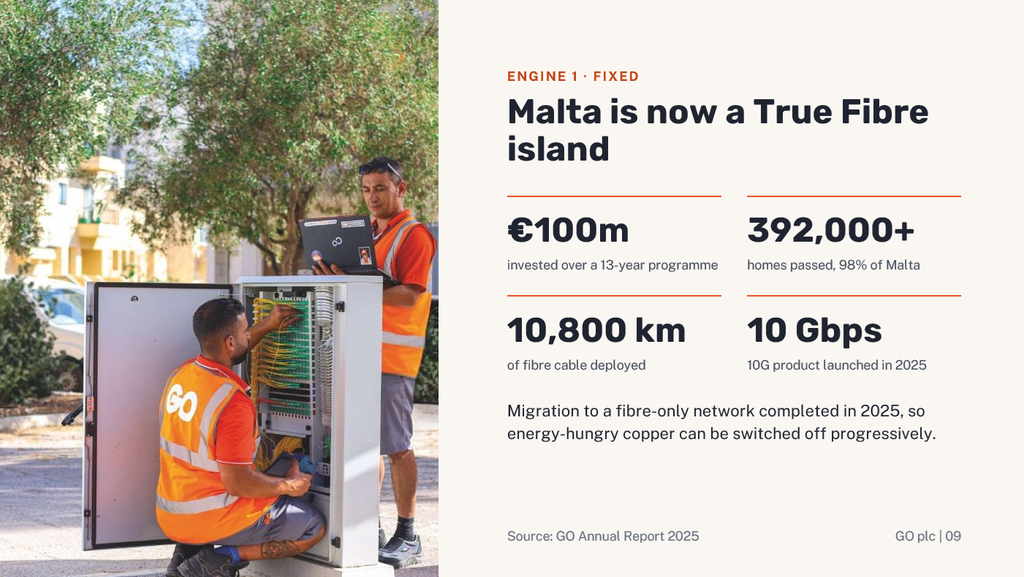
GO plc has invested approximately €100 million over the past 12 years in developing Malta’s fibre network, enabling almost 98% of households to access fibre connectivity and supporting broadband speeds of up to 10 gigabits per second.
The company has also invested in 5G technology and international connectivity through multiple subsea cables linking Malta to Europe and North Africa, improving network resilience and supporting sectors, such as online gaming and other internationally connected businesses.
These investments have helped GO plc capture a significant share of market growth, including 71% of broadband growth, 39% of mobile growth and 68% of pay-TV growth during this period.
Mr Grech also highlighted the company’s investment in Cablenet in Cyprus, describing it as an opportunity to apply lessons learned in Malta to a growing telecommunications operator in a different market. While acknowledging that Cyprus presents different challenges, he said customer growth and market expansion remain key priorities.
Building a second engine beyond telecoms
The second part of GO’s growth strategy is to increase its portfolio of non-telecommunications businesses. While GO recognises that some of its most valuable assets are not physical infrastructure but its customer relationships and workforce capabilities, Mr Grech said these assets have enabled the company to expand into areas including data centres, cloud services, cybersecurity, renewable energy, technology retail, energy management, telecare services and venture capital investing. GO reported that approximately 27% of group revenue now comes from businesses outside its traditional telecoms operations, generating €68.2 million in revenue.
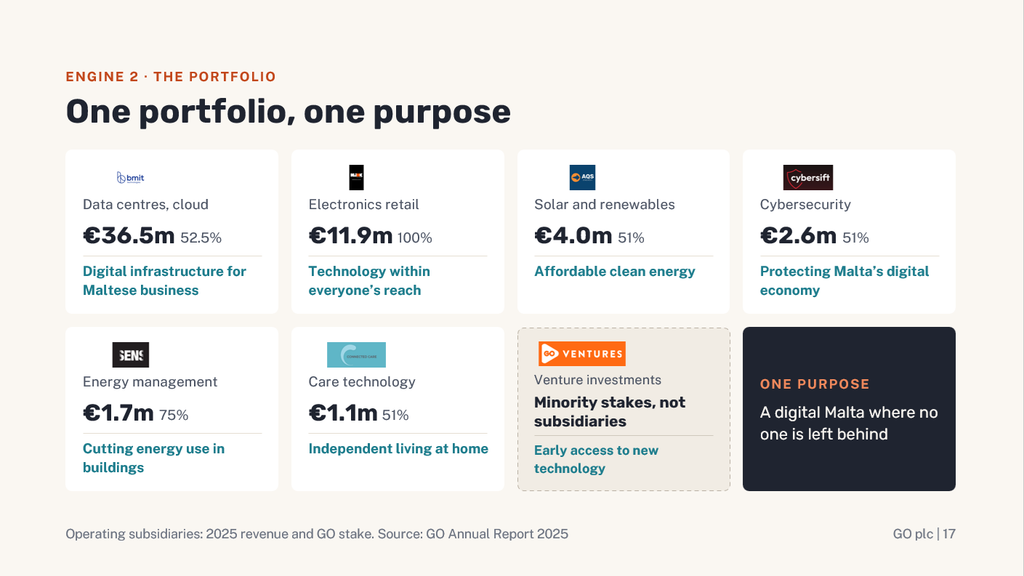
Among the businesses highlighted were:
- BMIT, which provides data centre, cloud and digital infrastructure services and has grown alongside Malta’s digital economy.
- AQS Energy, which focuses on solar energy solutions and has enabled the launch of subscription-based solar energy offerings that remove large upfront costs for customers.
- Klikk, an electronics retailer acquired in 2024, where revenues have increased significantly since joining the group.
- Cybersift, which provides cybersecurity services and develops proprietary cybersecurity products.
- Connected Care, which supplies assisted-living services and monitoring solutions for elderly people living independently at home.
Mr Grech repeatedly emphasised that these businesses are not intended to operate independently of the telecoms business. Instead, they are designed to benefit from the company’s existing customer base, sales channels and brand while creating new revenue streams and strengthening customer relationships.
Disciplined investment approach
A key element of GO’s strategy is an emphasis on investment discipline. According to Mr Grech, GO plc only invests in businesses where it believes it can help create value and where there is a clear strategic fit. Investments are assessed on their growth potential, synergies with the existing business and the company’s ability to contribute meaningfully to future success.
The group also operates GO Ventures, a venture capital arm that invests in early-stage European technology companies. Mr Grech cited the investment in Airalo as an example, reporting that an initial investment of around €200,000 ultimately generated approximately €2.8 million in realised gains.
Financial performance and shareholder returns
Over the past five years, GO plc’s profitability has doubled. Revenues have continued to grow, reaching €254 million, EBITDA €92 million and profit €20.7 million. The business serves more than 530,000 customer connections and has more than 6,000 shareholders.
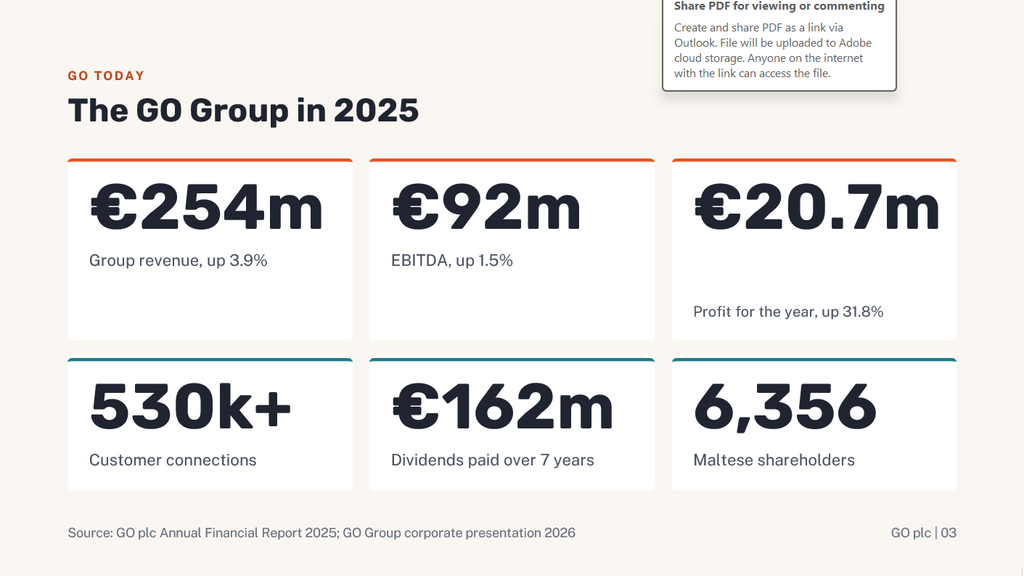
The company generated operating cash flow sufficient to support investment activity while continuing to pay dividends. Over the past seven years, shareholders have received €162 million in dividends.
Mr Grech said the company’s objective is to continue to fund growth primarily from operating cash flow while maintaining shareholder returns.
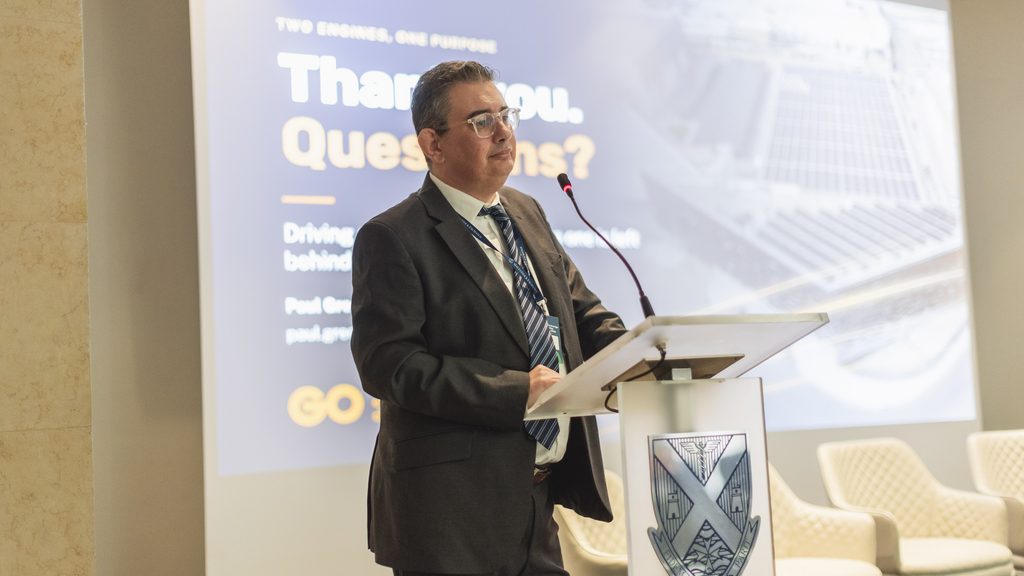
Photos: Jean Marc Zerafa
Top three takeaways for investors
1. GO’s telecoms business remains the foundation of growth
Despite diversification, management stressed that telecommunications remains the company’s core business. Major investments in fibre, 5G and international connectivity have largely been completed and are helping the company gain market share in broadband, mobile and television services.
2. Diversification is becoming a meaningful contributor
More than a quarter of group revenue now comes from activities outside traditional telecoms. Businesses such as BMIT, Klikk, AQS Energy, Cybersift and Connected Care are intended to provide additional growth opportunities and reduce reliance on a mature telecoms market.
3. Management is positioning growth and dividends as complementary objectives Expansion, acquisitions and infrastructure investment have been pursued while continuing to distribute cash to shareholders. This balance between growth investment and dividend payments are a defining feature of the company’s strategy.