
APS Bank’s innovation strategy driven by growth, technology and market access
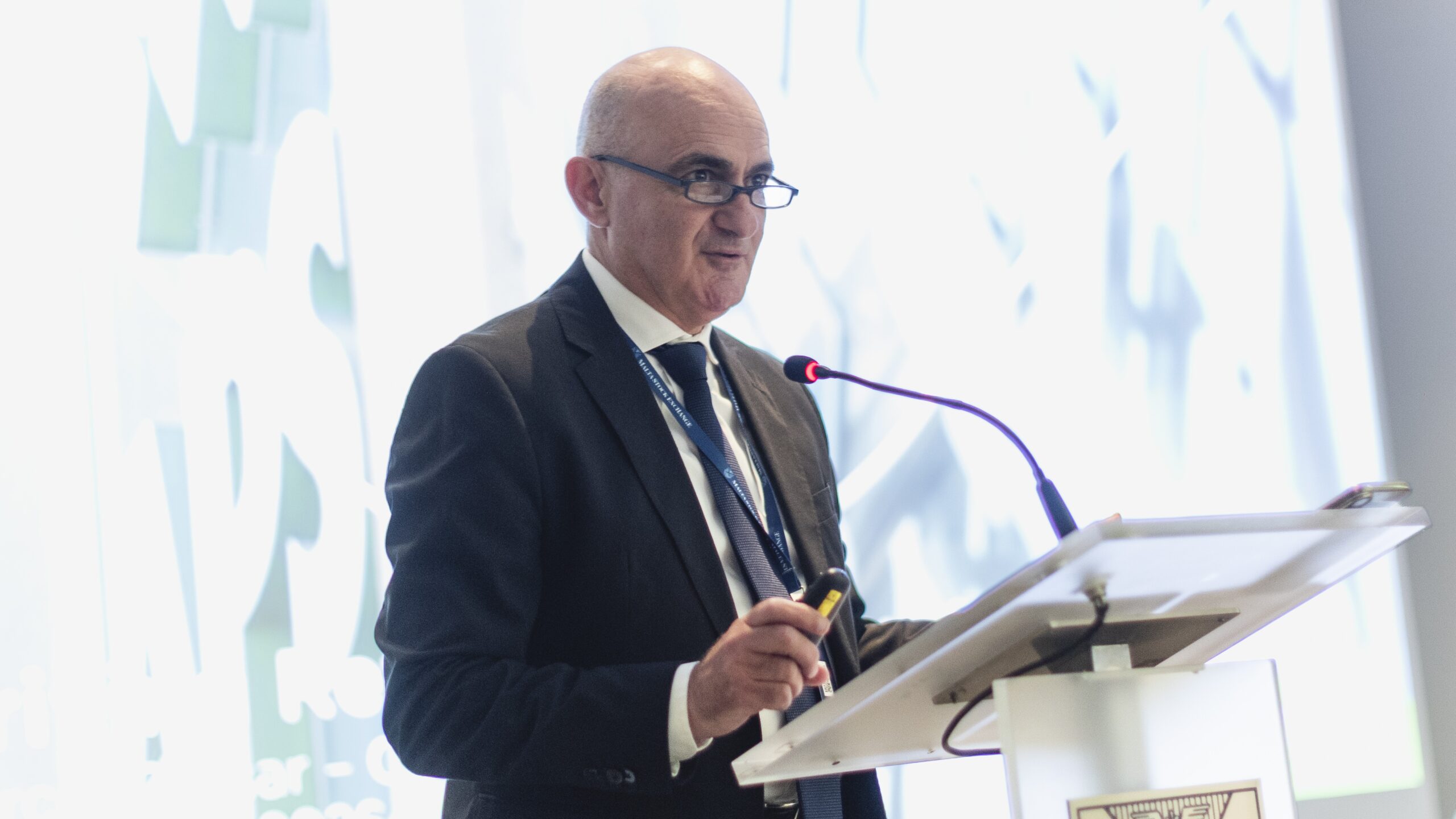
The Malta Stock Exchange hosted its first Investor Day Conference on 29 October 2026. As part of our ongoing coverage, we are delving deeply into each of the major speeches and presentations throughout the day.

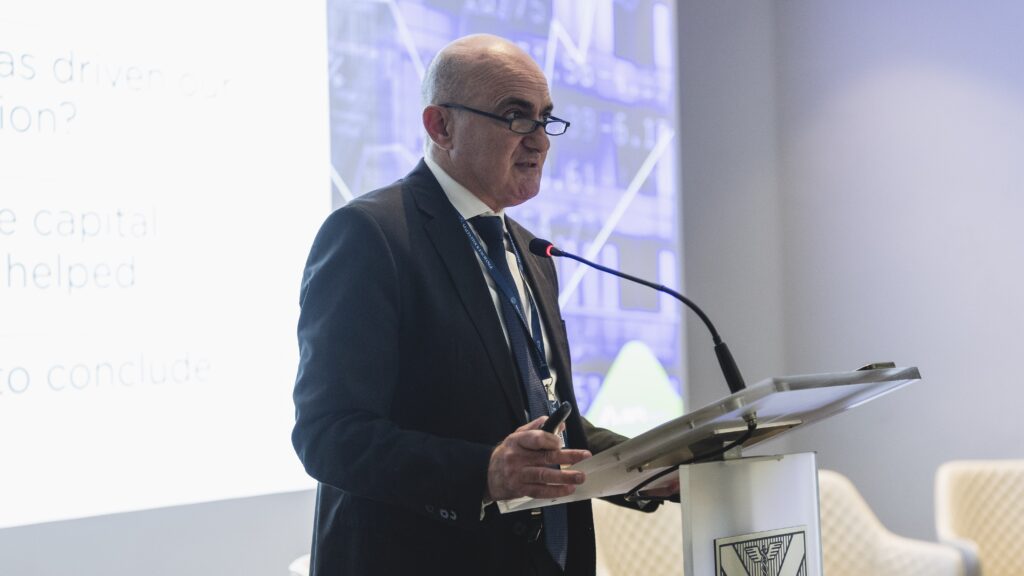
In a presentation titled Driving Retail Bank Innovation, Marcel Cassar, Chief Executive Officer of APS Bank plc, outlined how the bank has combined strategic planning, technological investment and capital market participation to support its transformation from a traditional community bank into a larger, more scalable retail banking institution.
Drawing on the bank’s 116-year history, Mr Cassar argued that innovation at APS has been evolutionary rather than disruptive, rooted in the institution’s founding social purpose while adapting to changing customer expectations, advances in technology and increasing regulatory requirements.
Innovation built on planning and growth
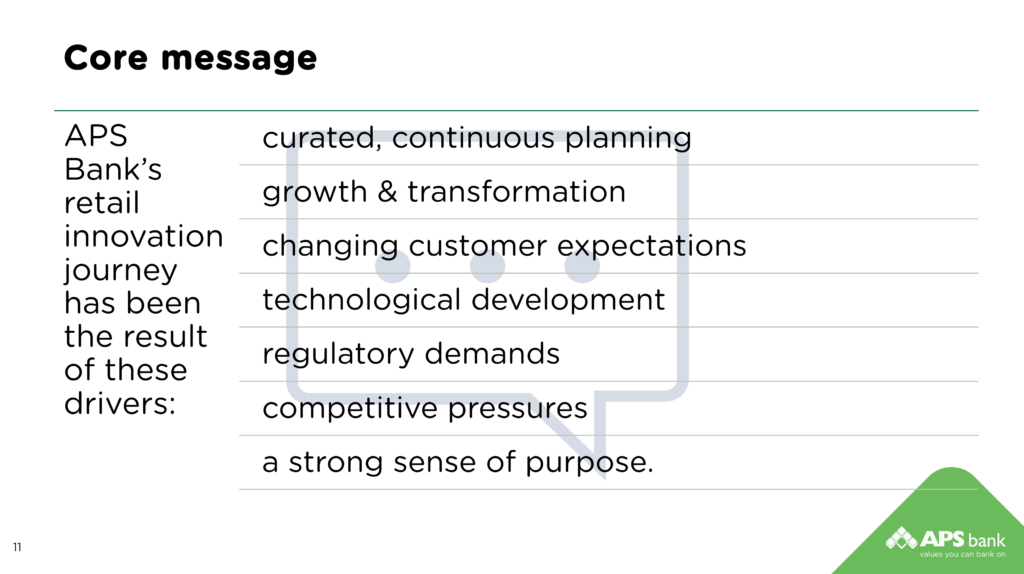
Mr Cassar identified seven principal drivers of APS Bank’s innovation journey: continuous planning, growth and transformation ambitions, changing customer expectations, technological development, regulatory demands, competitive pressures and a strong sense of purpose.
A central theme of the presentation was the importance of structured planning. APS operates through rolling three-year business plans that combine long-term strategic priorities with more immediate areas of focus, including financial discipline, productivity, customer experience and future readiness.
Growth itself, according to Mr Cassar, had become a catalyst for innovation. Over recent years, APS has expanded significantly in assets, customers, deposits and lending, creating a need for more scalable systems and processes while maintaining its community-focused identity.
Meeting changing customer expectations
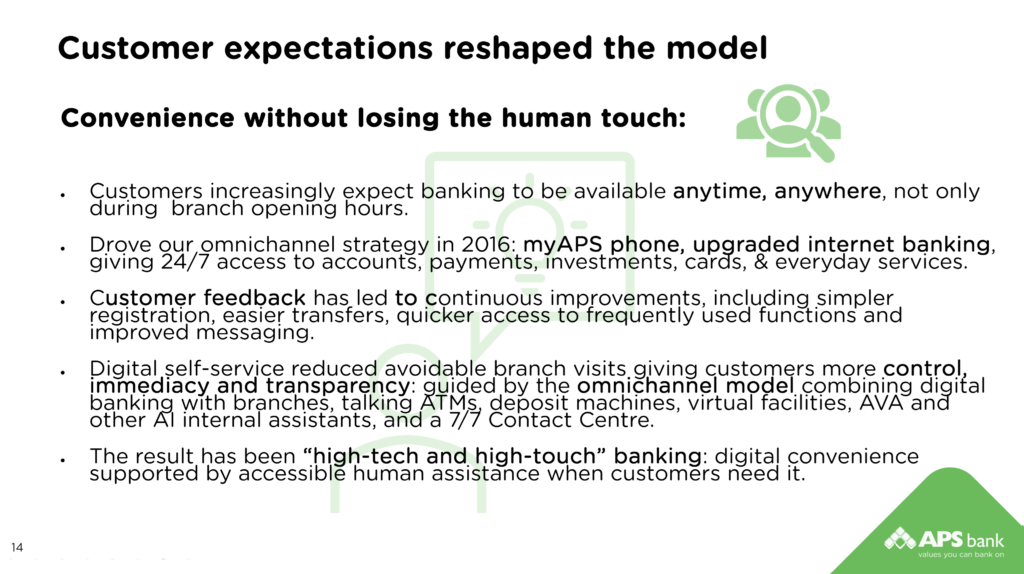
Mr Cassar highlighted how consumer expectations have changed, with customers increasingly expecting banking services to be available at any time and through multiple channels. This prompted APS to adopt an omnichannel strategy, including the development of the myAPS mobile application, enhanced internet banking services and a seven-day contact centre.
According to Mr Cassar, customer feedback has played a significant role in shaping service improvements, leading to simpler account onboarding, more efficient transfers, enhanced self-service options and easier access to commonly used banking functions.
The bank’s approach seeks to balance digital convenience with personal interaction, a model Cassar described as “high-tech and high-touch” banking.
Technology as an enabler
Technology investment was presented as another major driver of innovation. Mr Cassar noted that customer expectations, competitive pressures and regulatory requirements have required substantial investment in mobile banking platforms, cybersecurity, data protection, customer authentication and operational infrastructure.
More than 90% of APS’s digital banking activity is now conducted through its mobile application, while internet banking accounts for most of the remainder.
The bank’s innovation strategy, however, extends beyond customer-facing technology. Mr Cassar stressed that automation, digitalisation and emerging artificial intelligence capabilities are intended to improve efficiency while preserving trust, accessibility and personal relationships with customers.
Capital markets as a growth engine
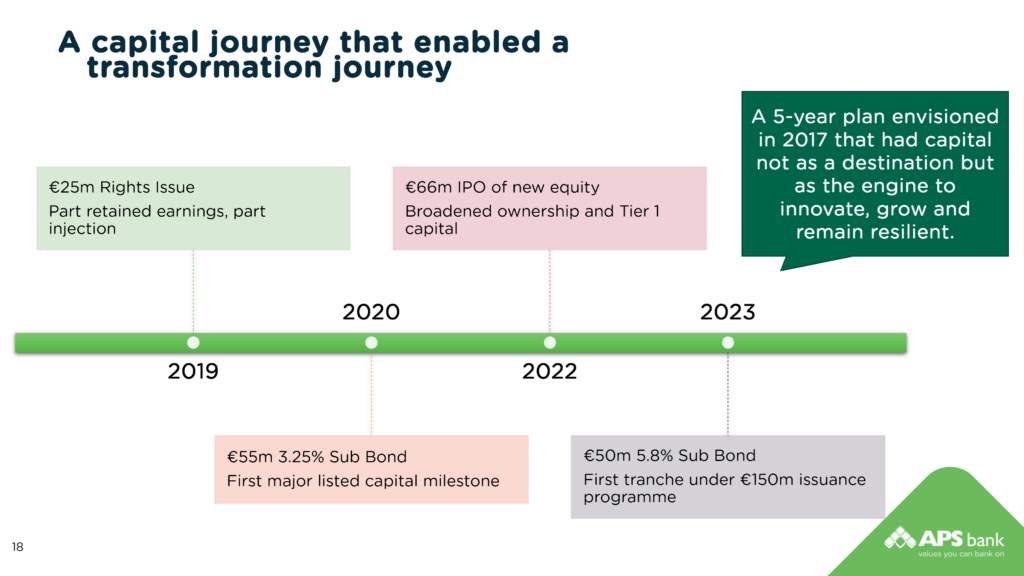
Malta’s capital market played its role in supporting APS Bank’s transformation. Mr Cassar recounted its five-year capital development plan, launched in 2017, that viewed capital not as an end in itself but as a means to support growth, resilience and innovation.
The plan included a €25 million rights issue, a €55 million subordinated bond issue in 2020, a €66 million initial public offering in 2022 and a further subordinated bond issue in 2023 as part of a €150 million programme.
Mr Cassar said that listing on the Malta Stock Exchange had delivered more than additional capital. It increased the bank’s capacity to invest, imposed greater governance discipline and disclosure requirements, and broadened the base of retail and institutional investors participating in the bank’s development.
Future direction
Looking ahead, Mr Cassar said innovation should be viewed as a continuing journey rather than a destination. He argued that successful banks would be those able to learn, adapt and execute quickly rather than simply those with the greatest scale.
He summarised the bank’s strategy as combining digitalisation for scale, automation for efficiency and AI for new possibilities, while maintaining trust as the foundation of banking services.
At the end of his presentation, Mr Cassar took two questions. The first was from MSE Executive Chairman Joseph Portelli, who noted that, while investors are pleased with the generous dividend yields paid in Malta, investors ultimately want higher stock prices. How can we encourage our boards to own shares? Commending both APS Bank and Bank of Valletta for having some level of insider share ownership, Mr Portelli argued that this needs to be actively encouraged further.
He suggested that boards and executive teams should be incentivised or required to hold shares (speculating whether a magic number might be 25% or a third of their remuneration) so they can directly experience the financial pain felt by everyday shareholders when stock prices remain stagnant for years. He dismissed concerns regarding Market Abuse Regulations (MAR) as a “cop-out”, stating that directors owning shares is standard practice globally and that regulatory compliance pathways exist.
He concluded that robust insider and board share ownership sends a clear message to the investing public: executive teams and board members share the same financial risks as shareholders and possess profound confidence in the company’s fundamentals and future.
Mr Cassar confirmed that, while some directors do hold shares in their personal capacity, holding shares has not traditionally been part of the bank’s regulated executive or board incentive structures (such as the Employee Share Incentive Plan – ESIP). However, he noted that this policy could potentially change and that there is active interest in share ownership.
Under APS Bank’s ESIP rules, awards are split between “identified staff” (senior management, who account for roughly 80% of the maximum award pool) and “non-identified staff” (high-performing junior personnel and future succession candidates). Approximately 20% of the bank’s 700-strong workforce receive annual share awards based on grade and performance, alongside other non-contributory pensions and bonuses.
While directors do not currently receive mandatory share awards as part of their compensation package, Mr Cassar affirmed that they continue to independently invest and acquire shares in the open market.
A second question related to the bank’s growth ambitions. Mr Cassar said the bank was still seeing growth opportunities in the domestic market. But as he had said in the company announcement on the previous day, it is also expanding its activities cross-border.
Typically, it would be following entities with a Maltese nexus – important groups, especially, or families with a Maltese nexus, that are investing and carrying out activities abroad, supporting and financing them. Now the bank is also being approached from overseas clients to originate and develop financing overseas.
Mr Cassar ended with an anecdote: back in 1990, when the Stock Exchange was still about to be formed, he spent Easter Sunday writing a prospectus for the privatisation of a bank in Malta. That is how far back he has been associated with the capital market: writing on a world processor the prospectus for the first bank privatisation.
Top three takeaways for investors
1. Innovation is being used to support scalable growth
APS presented innovation as a practical tool for managing expansion rather than as an end in itself. The bank has significantly increased its scale while investing in digital platforms, process improvements and operational efficiencies designed to support further growth.
2. Capital market access has been central to the bank’s transformation
The bank’s capital raising activities since 2017 have provided funding for growth, strengthened regulatory capital and broadened its shareholder base. Mr Cassar described capital market participation as a critical enabler of the bank’s development strategy.
3. APS is pursuing technology-led modernisation while retaining a community-bank identity
Mr Cassar repeatedly stressed that technological advancement, including automation and AI, is being implemented alongside human support, accessibility and a community-centred approach. The stated objective is to deliver more efficient and convenient banking without sacrificing trust or personal relationships.