
A journey to the capital markets
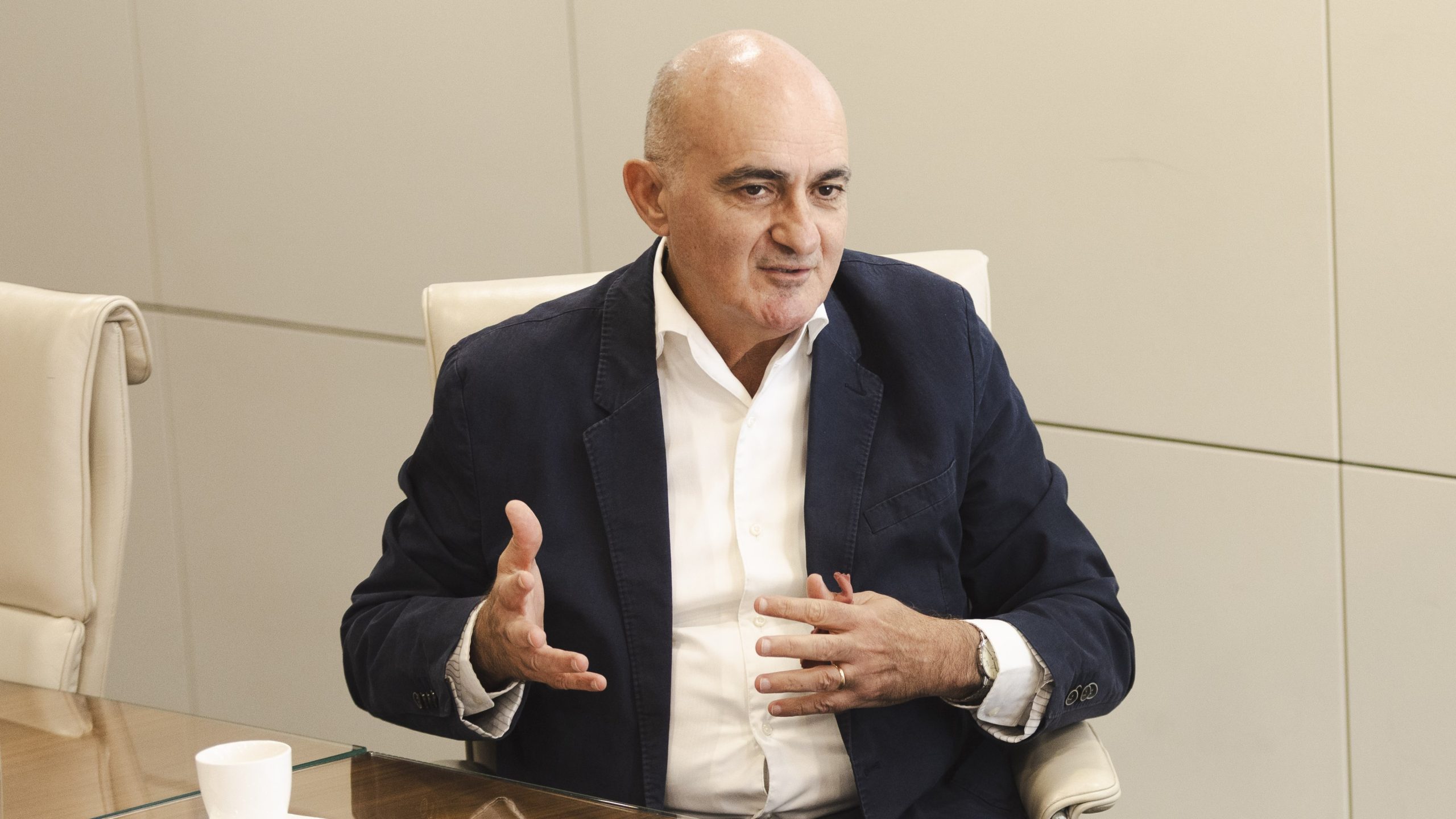
It has now been a decade since Marcel Cassar joined APS Bank plc (above photo: Jean Marc Zerafa) as Chief Executive Officer. Since then, he has taken the bank to the capital markets not just through bond issues but also through an IPO, a rights offering and successive scrip dividend issues. He speaks to Investi on the journey and his appraisal of the results achieved.
When Marcel Cassar joined APS Bank in 2016, it had a history as an ecclesiastical, privately owned bank that went back more than a century. “For most of that time, it had operated as a savings bank, guided by a clear mission and ethical values which had also given it a very stable background,” he recounted. Yet, from the beginning he argued that, for the bank to continue to grow and survive in a fast-changing environment, it was going to need one key ingredient – and that is access to more capital.
The shareholders back then were three Church entities, the Archdiocese of Malta (81%), the Diocese of Gozo (17%) and the Metropolitan Cathedral Chapter (2%). “Given their financial resources, not to mention lower interest rates, dropping collections and increasing demands on their finances, it was clear that their ability to continue supporting the bank was going to be constrained. So, the funding had to be sourced elsewhere,” Mr Cassar affirmed.
Capital development plan
Among the priorities of his mandate, a wider, bigger strategy for the bank started being drawn up, which included a capital development plan to run over a number of years. “We met with the bishops of the time and said, ‘You can keep having 100% of something with limited scope to grow, or a smaller stake of something much, much bigger.’ This was a reference to the dilution which would ensue if new capital were to come into the bank. As controlling shareholders, the bishops had the foresight to take the decisions which would allow the bank to grow and flourish, enjoying higher rewards and dividends while lowering their control on the bank.”
The matter required discussion. “This was something that had been talked of for decades, but nothing significant had happened,” he observed. The shareholders agreed to adopt the plan and, within months, the wheels were set in motion, with a new Memorandum and Articles of Association being drafted preparing the bank to go public.
“The first capital raise of about €25 million came in 2019 and at around the same time the bank was converted from a private limited company to a public company. All the raise came from the existing shareholders, about half of it in the form of retained profits and the other half a capital injection.” That was phase 1 of the capital development plan, “which was to move to a next level the following year – in the thick of the Covid-19 pandemic,” Mr Cassar recalled.
2020 bond issue
APS Bank first approached the capital markets with a subordinated bond issue in November 2020. This, Mr Cassar said, was a big success and was heavily oversubscribed beyond the €55 million that were targeted.
The big step came in 2022 with the Initial Public Offering (IPO), which saw the three Church entities dilute their shareholding to an aggregate of 67% as €66 million of new equity was raised from over 3,000 new shareholders. “Once again, the IPO was a resounding success as applications for over €102 million had been received at the point of opening the Offering.”
A second bond issue in Q4 of 2023 was also a big success, raising another €50 million. Still, Mr Cassar pointed out that such a bond issue was aimed at raising Tier 2 capital, known as MREL, which is “money that can absorb losses if a bank gets into serious trouble, so taxpayers don’t have to rescue it – important for capital adequacy and liquidity, but limited when it comes to allowing the bank to lend more and grow.”
2025 rights issue
Although there has been consistency over the years in strengthening Tier 1 capital by retaining profits and distributing scrip dividend, the Rights Issue of October 2025 “was another milestone in raising equity, bringing in new shareholders as the Archdiocese of Malta, the Diocese of Gozo and the Metropolitan Chapter further diluted their shareholding. Now the three original shareholders are down to around 55% in the aggregate.”
APS Bank raised €45 million from the Rights Issue, of which €30 million – in large part, the rights of the Church entities that were not taken up – were placed with a strong lineup of local and foreign investors, including banks, institutions, important public corporates and family offices, “which is a source of great satisfaction”, according to Mr Cassar.
The outcome is a broad investor base: some 840 bondholders and well over 4,000 shareholders (3,700 registered in their name and a few hundred more under nominee). But the Church currently still has control of the bank, with the Archdiocese having the right to nominate five Board members out of 11 (including the Chairman), and the Gozo Diocese can nominate a further director.

Share price performance
Apart from giving the bank access to new capital forms and instruments, enabling it to grow, access to the capital markets has given it more visibility and more depth.
The bank pays regular dividends, twice a year, i.e. interim and final dividend, usually in the form of scrip, so shareholders can choose to either receive it as new shares or in cash. Shareholders and bondholders are entitled to other benefits, including preferential rates and terms on bank products and services, as well as targeted deposit campaigns from time to time.
“I think the share price has recovered decently in recent weeks,” Mr Cassar believes, but adding that “the direction and prospects of the bank are far from yet being recognised by investors”. He referred to the record first-half 2026 performance, “testament to the strength of our business strategy and the discipline of execution – not resulting from some exceptional one-off event, but from good management, ongoing digital transformation and an unwavering commitment to putting our customers first”.
But the Maltese equity market is what it is, lacking size, depth and traction many times: “We’re delivering on what we promised, and we’re going to show it with even more to come, creating value in the bank – and hope the market will recognise that.”